Gov Uba Sani Signs 3 Landmark Laws
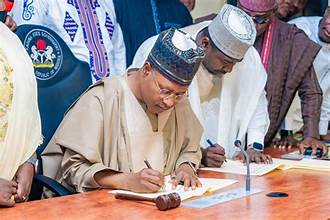
Governor Senator Uba Sani of Kaduna State has signed three landmark laws as a major milestone in the State’s drive to accelerate economic growth, strengthen institutions, and promote sustainable development.
The Commissioner for Information and Culture, Malam Ahmed Maiyaki, in a statement, indicated that the Governor disclosed that the newly enacted Kaduna State Electricity Law, 2026, Kaduna State Agricultural Development Fund, KADFund, Law, 2025, and the Kaduna State Climate Change Advisory Board Law, 2026, provide a comprehensive framework for transforming the State’s energy, agriculture, and environmental sectors.
The Kaduna State Electricity Law, 2026 establishes the Kaduna State Electricity Regulatory Commission to oversee electricity generation, transmission, distribution, and supply within the State, while creating opportunities for private-sector investment, renewable energy development, and improved access to electricity.
The KADFund Law, 2025 creates a dedicated financing mechanism to support farmers, cooperatives, agribusinesses, and agricultural value-chain actors through grants, soft loans, technical assistance, and investments in critical infrastructure aimed at boosting food security and agricultural productivity.
Similarly, the Kaduna State Climate Change Advisory Board Law, 2026 establishes a state-level framework for climate action, environmental sustainability, climate finance mobilization, and the integration of climate considerations into development planning, reinforcing Kaduna’s commitment to sustainable development.
Maiyaki said the three laws collectively underscore the administration’s vision of building resilient institutions capable of driving inclusive growth, attracting investment, expanding opportunities, and delivering lasting benefits to citizens.
He noted that the landmark legislations reflect Governor Uba Sani’s commitment to laying the foundations for a prosperous, sustainable, and competitive Kaduna State through electricity sector reform, agricultural transformation, and climate-responsive governance.
According to him, the reforms establish the institutional framework needed to strengthen food security, improve living standards, and position Kaduna as a model for innovation, sustainable development, and effective subnational governance.
Related Articles
The following 6 pages may interest you as well: